Blog
PVC Rubber Badges: A Modern Way to Create Custom Patch Designs

Custom patches are no longer limited to traditional embroidered designs. Today, PVC rubber badges are becoming a popular choice for brands, teams, uniforms, clubs, outdoor apparel, and custom merchandise because they offer a clean, raised, and highly detailed appearance.
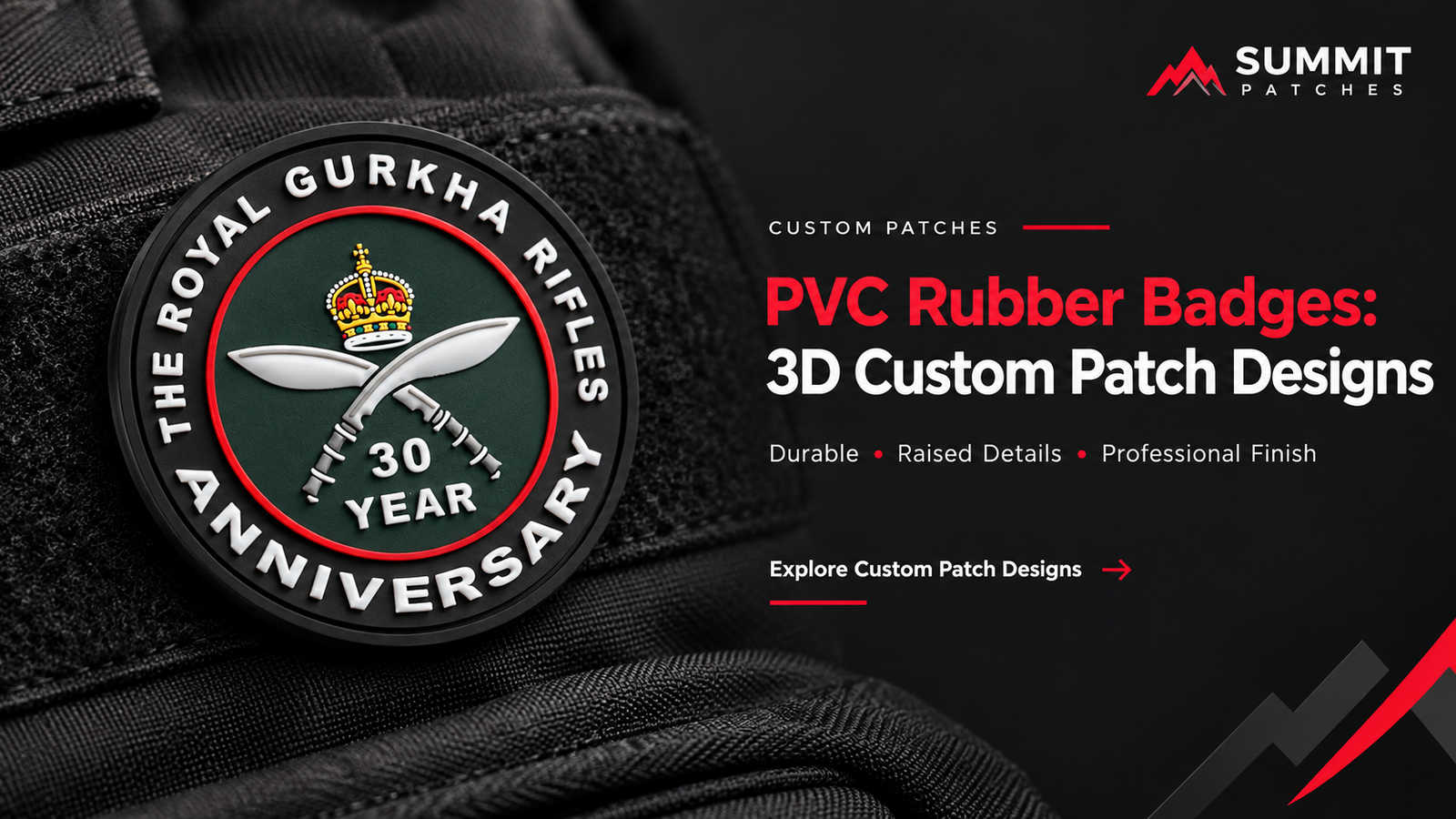
The badge shown in this design is a good example of a 3D PVC rubber patch with raised lettering, layered details, and a strong red, white, black, and dark-green color combination. The raised effect gives the design a dimensional appearance while keeping the overall badge clean and professional.
At Summit Patches, custom artwork can be prepared for different patch and embroidery applications, with attention to clean details and production requirements.
What Is a PVC Rubber Badge?
A PVC rubber badge is a flexible, durable patch made from PVC material. Instead of using thread for the entire design, the artwork is created with molded and raised sections that produce a 3D or embossed appearance.
This makes PVC badges different from traditional embroidery patches. Embroidered patches rely mainly on thread and stitching, while PVC patches use shaped rubber-like material to create the design.
PVC badges are especially useful when a design contains:
- Raised lettering
- Bold logos
- Multiple layers
- Strong outlines
- Simple geometric shapes
- Detailed symbols
- Contrasting colors
The result is a modern patch that looks clean and distinctive.
PVC Rubber Badge vs. Traditional Embroidery
Both PVC and embroidery patches have their own advantages.
Embroidered patches are ideal when you want a classic fabric texture, visible stitching, and a traditional appearance. Summit Patches provides embroidery digitizing and custom embroidery solutions designed around clean, production-ready artwork.
PVC rubber badges, on the other hand, are better suited to designs where you want a smooth surface, raised details, and a more dimensional appearance.
The right choice depends on the artwork, application, material, and final look you want to achieve.
Creating a Clean 3D Patch Design
A successful PVC badge starts with good artwork.
The design needs to be prepared carefully so that the different layers, outlines, lettering, and shapes remain clear when converted into the final patch.
For example, the featured badge uses:
- A dark outer border
- White raised lettering
- A red circular accent
- A darker inner background
- Raised central artwork
- Clear spacing between design elements
The red and white color combination gives the badge strong visual contrast without making the design look overcrowded.
This type of approach can work particularly well for logos, organizational badges, branded clothing, team apparel, and other custom patch applications.
Why 3D Details Make a Difference
One of the biggest advantages of a raised PVC design is depth.
Instead of appearing completely flat, selected parts of the artwork can be raised to create visual separation. This helps important elements such as lettering, borders, and logos stand out.
However, adding too many details can make a patch look messy. Good patch artwork should maintain a balance between detail and readability.
That is why professional artwork preparation and digitizing are important when a design is going into production.
From Artwork to Production-Ready Design
The process normally begins with an existing logo, image, sketch, or custom concept.
The artwork is then reviewed and prepared according to the requirements of the final application. For embroidery projects, digitizing converts artwork into a stitch-ready format. Summit Patches also focuses on clean vector artwork and production-ready designs.
A typical workflow can include:
1. Artwork Review
The original logo or design is checked for size, detail, colors, and overall structure.
2. Design Preparation
Elements are adjusted so that the important details remain clear in the final application.
3. Digitizing or Vector Artwork
For embroidery, artwork is converted into a suitable stitch file. For other applications, clean vector artwork may be prepared.
4. Sample or Preview
Where required, the design can be reviewed before production. Summit Patches highlights sew-out previews for embroidery projects when needed.
5. Final Production
Once the design meets the required specifications, it can move forward toward production.
Where Can Custom PVC Badges Be Used?
Custom PVC rubber badges can be used for many different types of apparel and merchandise.
Common applications include:
- Jackets
- Bags
- Caps and hats
- Uniforms
- Outdoor clothing
- Team apparel
- Workwear
- Promotional merchandise
- Branded clothing
The final application should always be considered when deciding the patch size, shape, colors, and level of detail.
Custom Patch Design by Summit Patches
If you already have a logo, sketch, image, or existing artwork, Summit Patches can help turn your idea into a professional production-ready design.
The company provides services covering embroidery digitizing, custom patches, vector artwork, logo digitizing, 3D puff digitizing, cap digitizing, and other embroidery-related solutions.
You can explore the website here:
For examples of embroidery work, you can also view the site’s embroidery portfolio:
Final Thoughts
A PVC rubber badge is a great option when you want a patch with a modern, raised, and durable-looking appearance. The combination of bold shapes, clean lettering, contrasting colors, and dimensional details can make a simple logo much more noticeable.
Whether you need a traditional embroidered patch, custom artwork, or a more modern patch concept, the most important step is preparing the artwork correctly before production.
At Summit Patches, the focus is on precision, clean details, custom solutions, and production-ready artwork for embroidery and patch projects.